

Thermal engineering services workspace

Design to Development

Engineering Services

Heat Exchanger Design & Thermal Engineering Services

Complete Lifecycle

Thermal Design

Expert design, analysis, and development for advanced thermal systems across automotive and industrial applications.Our engineering services cover the complete lifecycle—from concept and simulation through to validation, manufacturing support, and cost analysis.

TDS Expertise

DESIGN & ENGINEERING

Your Partner in Innovation

We bring complete know-how in heat exchanger design – from concept to series production. Our engineers have proven expertise in developing radiators, condensers, evaporators, R744 gas coolers, CACs, chillers, and oil coolers for automotive and industrial applications.

Tube & Fin Heat Exchangers

  • Radiators (low & high temperature) — aluminium and plastic tanks, full face, and bed-type designs, smooth and dimpled tubes.
  • Air-Cooled Condensers (with or without integrated R/D) and Outside Heat Exchangers (OHX), covering multi-port extruded and folded tubes and tubes with inner fins
  • R744 and R1234yf/R134a evaporators with benchmark louvered fin designs that improve condensate drainage in wet conditions.
  • R744 Gas coolers cross flow and cross-counter flow.
  • Air-cooled Charge Air Coolers (CAC) — full face, bed type, mosaic, and wheel arch solutions.
  • Air-cooled oil coolers designed for front-end and wheel arch locations.

Plate Type Heat Exchangers

  • Liquid-Cooled Condensers (LCCOND) — from previous experience, we contributed to launching the first automotive mass-production application developed for BMW (SOP 2015).
  • Chillers.
  • Coolant-to-Coolant HEX.
  • Oil coolers.
  • Note: multi-pass HEX, plates with chevron, zigzag, and finned (offset-strip fins, easy- and hard-way).

Special Shell & Tube Heat Exchangers

  • Liquid-Cooled CAC (LCCAC) — stand-alone design, high-performance offset-strip fins on both sides: air and coolant.
  • R744 Liquid-Cooled Gas Coolers — ultra-compact and high performance, can be designed for an effectiveness >98% at 400 kg/h refrigerant flow. Offset-strip fins on the coolant side and multi-port extruded tubes on the refrigerant side.

Our Strengths

  • Full know-how in louvered fin designs, achieving high thermal-hydraulic performance for any HEX type. For evaporators and cooler cores, we offer a special louvered fin design that improves condensate drainage and wet-condition thermal performance.
  • Dimple pattern thermal-hydraulic optimisation for LT radiators (laminar regime) and HT radiators (transitional regime) tubes.
  • Offset-strip fin thermal-hydraulic optimisation for any HEX applications.
  • Industry-leading durability under corrosion, pressure, and thermal cycling, cleanliness, stone impact, and vibration.
  • Full knowledge of the development of the HEX manufacturing process for mass production.

Case Examples

  • Support in the development of the front-end cooling module for the Volvo GPA platform.
  • BMW LCCOND: First liquid-cooled condenser for the automotive market.
  • VW Group: Developed a method for front-end HEX performance specification, now adopted company-wide.
  • GM LCCAC: Patented 3-cylinder-specific design (EP3372940) and integrated intake-manifold concept (EP2872848) with market-leading performance/pressure-drop trade-off.

Highlights

  • VW ID3/ID4 R744 heat pump benchmarking — product design, architecture analysis, and efficiency studies.
  • Development of next-generation R744 heat pump architectures with ejector integration, reducing compressor size and enabling fast charging.
  • Prototyping of R744 HEX: liquid-cooled gas coolers, evaporator, inner gas cooler, and OHX with industry-leading effectiveness.
  • R744 heat-pump architectures that reduce valve count to keep high A/C efficiency while lowering compressor displacement — cutting system cost and enabling fast charging.
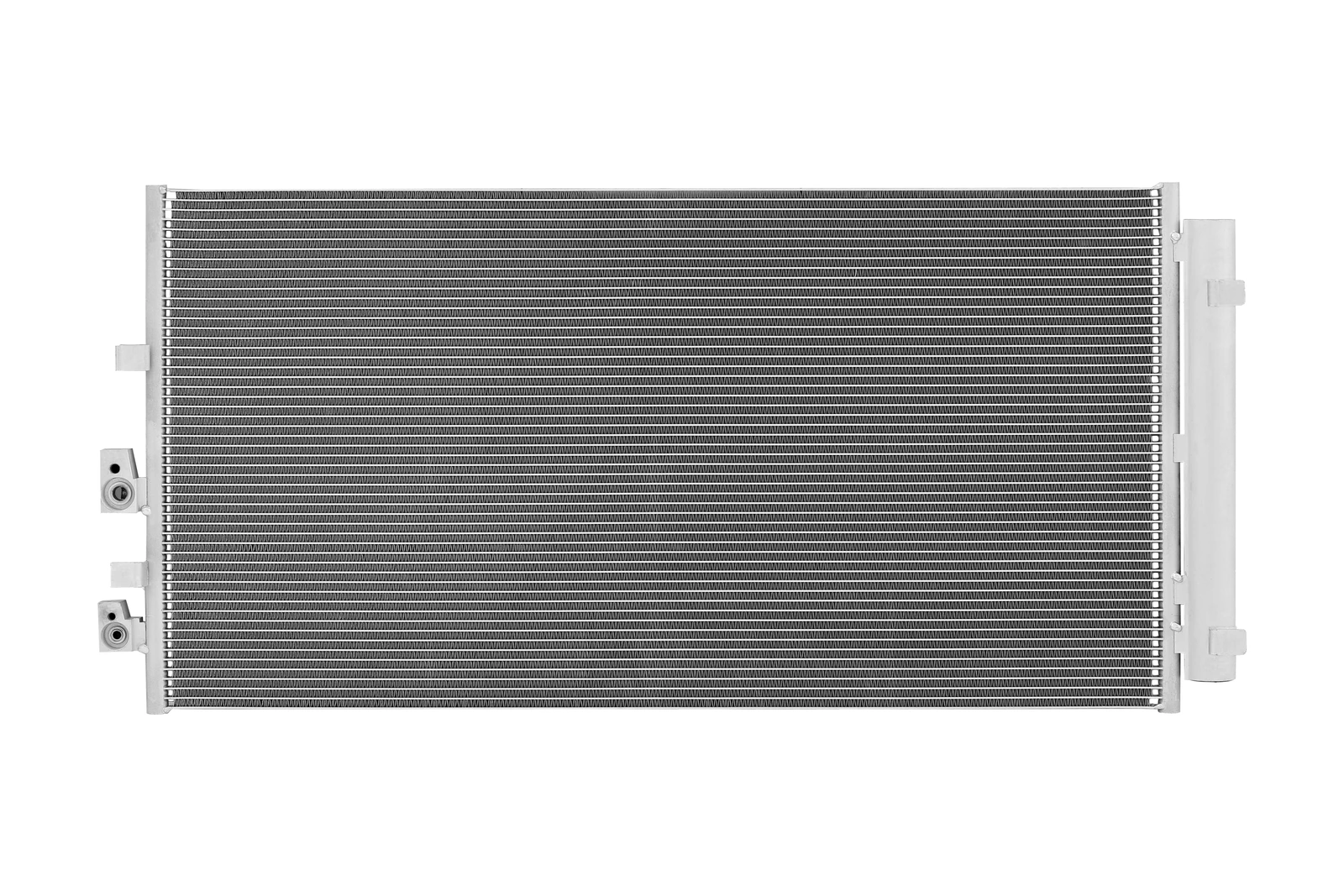
Condensers / OHX / R744 gas coolers

We design cooling modules that integrate seamlessly into vehicle front-end architectures, balancing thermal efficiency, aerodynamic performance, and packaging constraints.

Capabilities

  • Module layout definition and packaging studies.
  • Thermal performance prediction for multi-HEX assemblies.
  • Airflow management with shroud, fan, and ducting integration, including RAM air and vehicle resistance effects.

Tools & Methods

  • In-house FCM simulation tool for airflow determination, pressure rise, fan rescaling, and performance simulation.
  • Coupled FCM and HEX performance modelling for accurate module sizing.
  • Design optimisation for low noise (NVH).

Results Delivered

  • Efficient modules for ICE, hybrid, and EV platforms, including fast-charging, and R744 heat pump applications.
  • Reduced fan power consumption through optimised module airflow design.

TDS combines thermal analysis with mechanical design to develop heat exchangers and front-end cooling modules (CRFM). We assess component packaging, interfaces and mounting points, taking account of assembly, manufacturing and serviceability constraints.

Proposed scope

  • CAD design of components and assemblies.
  • Packaging of heat exchangers, fans and shrouds.
  • Vehicle interfaces and mounting point studies.
  • Tolerance definition and manufacturing considerations.
  • Variant management and parametric model development.

Deliverables

Depending on the agreed scope, deliverables may include 3D CAD models, dimensioned drawings, integration studies and design reviews. Requirements and deliverables are defined with the customer at the start of the project.

Collective expertise

TDS combines expertise in thermal engineering, simulation and mechanical design to support component development and integration.

Discuss your cooling module

TDS supports the development of integrated vehicle thermal management systems, with particular expertise in electric vehicles and heat pumps using natural refrigerants such as R744 (CO₂) and R290 (propane). We model the interactions between refrigerant and coolant circuits, cabin HVAC, battery cooling, electric motors and power electronics to guide architecture and component choices before prototype testing.

Architectures & Component Sizing

  • Definition of system requirements, operating modes and thermal architectures.
  • Comparison of heat pump configurations, including hot gas loops, vapour injection and ejector integration.
  • Integration of refrigerant circuits and low- and high-temperature coolant loops.
  • Sizing of heat exchangers, compressors, pumps, fans and valves against system requirements.

Simulation & Control Strategies

  • Integrated 0D/1D system modelling with GT-SUITE.
  • Steady-state performance assessment and transient simulation over driving and charging scenarios.
  • Development and assessment of control strategies for compressors, pumps, fans and valves, including heating and cooling priorities.
  • Simplified and 3D cabin thermal modelling to assess thermal loads and passenger comfort, with the level of detail adapted to the project.

Results Delivered

  • Architecture comparisons and recommendations for component sizing and control strategies.
  • Heating and cooling capacity, coefficient of performance (COP), energy consumption and assessment of the impact on vehicle range.
  • Temperature and pressure profiles, component operating limits and system response during transients.
  • Sensitivity analyses covering ambient conditions, thermal loads and operating scenarios.
Discuss your vehicle thermal management project

Fin and tube geometry directly influences thermal efficiency, pressure drop, and manufacturability. As recognised experts in fin and tube geometry optimisation, we engineer designs that maximise performance while respecting manufacturing constraints.

Fin Designs

Our designs are validated by 3D CFD modelling and in-house HEXsim simulations, balancing performance with manufacturability.

  • Louvered fins — benchmark market design for dry and wet condition performance.
  • Offset strip fins — optimal thermal-hydraulic performance for both flow directions: easy- and hard-way.

Tube Designs

  • Our designs are validated by 3D CFD modelling and in-house HEXsim simulations, balancing performance, pressure drop, and manufacturability.
  • Flat tubes (folded, extruded) and extruded multiport tubes (MPE). Designed and optimised with the HEXsim tool.
  • Dimpled tubes — custom-developed for EV and ICE radiators for hill-climb and Vmax conditions, enhancing thermal transfer without exceeding allowed pressure drop. Designed and optimised by 3D CFD analysis.
  • Tube with inner fins. Designed with HEXsim and with support of 3D CFD analysis if needed.

Engineering Approach

  • 3D CFD studies to optimise heat transfer coefficient vs. pressure drop.
  • Geometry optimisation for specific flow regimes (laminar/turbulent).
  • Design for manufacturability considering extrusion, forming, and brazing constraints.

Achievements

  • Benchmark louvered fin geometry for various types of HEX and recognised for superior wet-condition performance.
  • Enhanced tube designs for radiators for EV (laminar regime) and ICE conditions (transition regime).
  • Tube with inner fins optimised for condensers and OHX.
  • MPE tubes optimised for flow boiling, condensation, and oils.

We use Computational Fluid Dynamics when the physical problem can’t be handled by our in-house 1D/2D HEX simulation (HEXsim).

Applications

  • Fin and tube optimisation.
  • Pressure drop estimation for flows through complex geometries.
  • Air outlet temperature distribution (spread) for heater cores and inner gas coolers by considering inner flow maldistribution.
  • Airflow distribution in cooling modules.

Outputs

  • Heat transfer coefficient and friction factor correlations in terms of Nu (or j) and f.
  • Pressure loss profiles.
  • Temperature distribution visualisation.

Case Work

  • 3D CFD analysis of fin temperature distribution, correlating test and simulation with high accuracy.
  • Tube and fin optimisation projects for multiple HEX types.

Finite Element Analysis ensures mechanical integrity and durability before production.

Capabilities

  • Structural load assessment.
  • Fatigue and vibration analysis.
  • Thermal and pressure cycling stress evaluation.
  • Stone impact resistance simulation.

Partnership

  • Collaboration with Luxembourg University for advanced mechanical studies.

Example

  • FEA study of fan assembly mechanical constraints leading to improved fatigue life.

Our techno-economic studies ensure solutions are not only technically feasible but also cost-effective and sustainable.

Services

  • Thermodynamic system design, sizing, and simulation.
  • Techno-economic studies providing all technical and economic KPIs.
  • Integration of heat pump, ORC, Brayton cycles, Stirling engine, and Carnot batteries.

Benefits

  • Powerful multi-objective optimisation: CAPEX and OPEX reduction, minimisation of payback period.
  • Lower CO₂ footprint.
  • Enhanced energy independence.

Our refrigeration expertise covers both automotive and stationary applications, specialising in heat pump systems, and natural refrigerants such as R744 (CO₂) and R290.

Capabilities

  • R744 (CO₂) and R290 system design.
  • Ejector integration for throttling loss recovery.
  • Components sizing.

Project Highlights

  • R744 evaporator design with 38mm core exceeding VDA cooling capacity targets.
  • Multi-refrigerant capability with deep knowledge of refrigerant thermophysical properties.

Engineering Services Inquiry